

Keeping track of business expenses seems simple when a company is small. Then receipts start piling up, purchases are made from multiple accounts, invoices get buried in emails, and several months later you’re trying to remember what a transaction was for.
A good expense organization system doesn’t need to be complicated. The goal is simply to make sure expenses are recorded consistently and the documentation supporting those transactions can be found when you need it.
Building a few good habits can make bookkeeping easier, improve the accuracy of your financial reports, and save considerable time when tax season arrives.
Start by Separating Business and Personal Expenses
One of the easiest ways to make expense tracking more difficult is mixing business and personal purchases.
Using dedicated business bank accounts and credit cards creates a clearer record of business activity and makes it much easier to identify transactions during bookkeeping and reconciliation.
Occasional mistakes can still happen. If a personal purchase ends up on a business card, or a business expense is paid personally, it should be recorded appropriately rather than simply ignored.
The important part is making separation the normal practice.
Create One System for Your Receipts

Receipts become difficult to manage when they’re stored everywhere.
Paper receipts may be in your wallet or vehicle, while others are sitting in an email inbox or saved somewhere on your computer. By the time you need one, finding it becomes the problem.
Choose a consistent place to store your documentation. Many businesses use digital storage or accounting software that allows receipts and supporting documents to be attached directly to transactions.
Whatever method you choose, use it consistently.
For paper receipts, capturing a digital copy shortly after the purchase can also prevent problems with receipts becoming lost, damaged, or unreadable over time.
Categorize Expenses Consistently
Organizing receipts is only part of the process. Expenses also need to be recorded in the appropriate accounts.
Suppose a contractor purchases materials from the same supplier several times throughout the month. Categorizing one purchase as Materials & Supplies, another as Job Expenses, and another under a miscellaneous category can make financial reports unnecessarily difficult to interpret.
Your chart of accounts should provide meaningful categories, and similar transactions should generally be treated consistently.
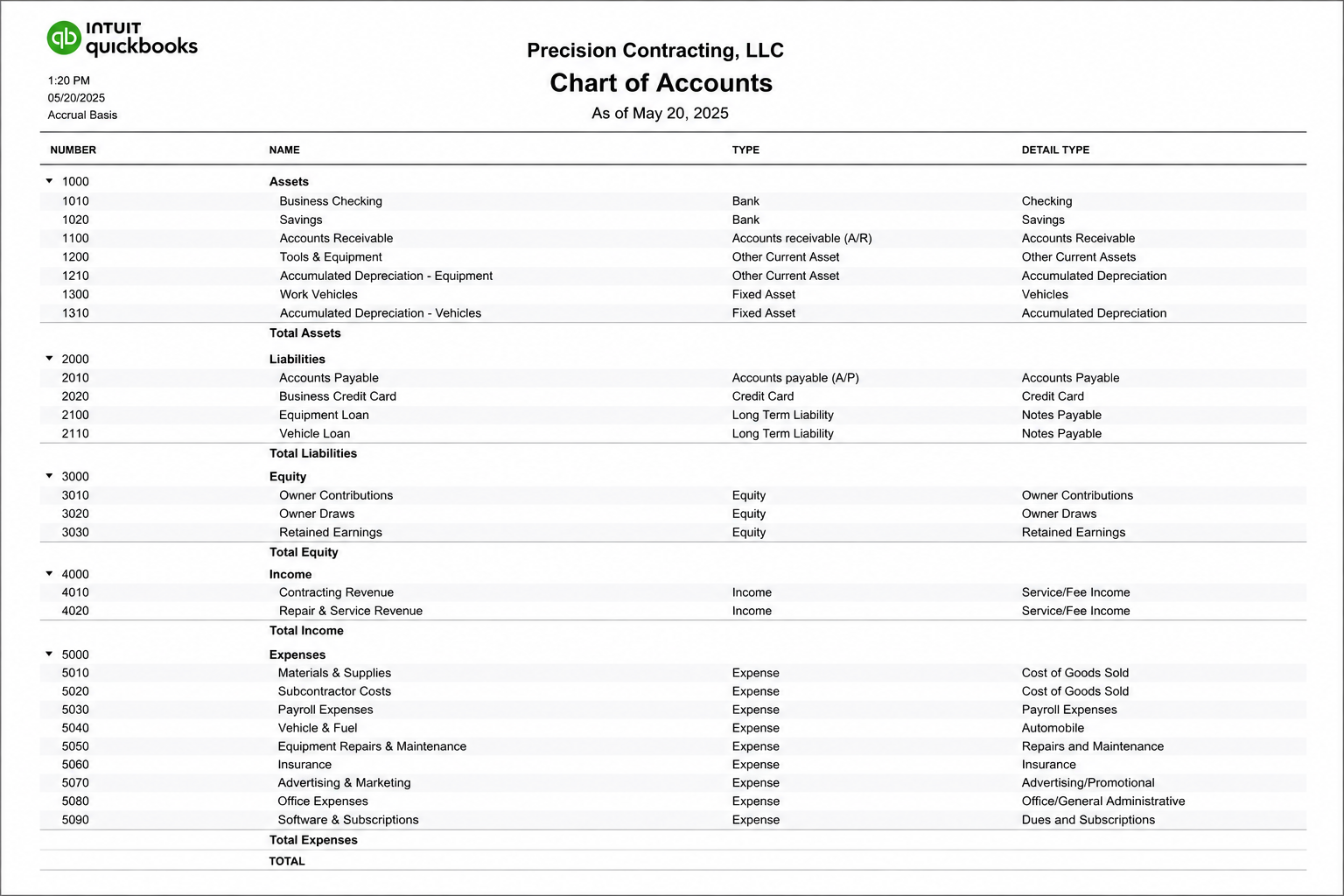
That doesn’t mean creating a separate category for every type of purchase. Too many categories can make your books just as difficult to manage as too few.
The goal is to create enough detail to understand where your money is going without overcomplicating your accounting system.
A Simple Expense Organization Process
For most small businesses, the process can be kept fairly straightforward:
Purchase Made → Receipt Captured → Expense Categorized → Documentation Stored → Account Reconciled
For example, imagine a contractor purchases $425 of materials for a customer project using the business credit card.
Instead of leaving the receipt in the truck, the contractor captures it digitally. The transaction is categorized as Materials & Supplies, the receipt is stored with the appropriate documentation, and the transaction is later verified when the credit card account is reconciled.
Nothing about that process is particularly complicated. The benefit comes from doing it consistently.
When the same process is followed throughout the year, there is much less work required later to determine what transactions were for or locate missing documentation.
Don’t Wait Until Tax Season
Expense organization becomes much harder when it’s treated as an annual project.

A regular bookkeeping routine gives you an opportunity to categorize transactions, identify missing receipts, review unusual expenses, and correct mistakes while the activity is still relatively recent.
It also helps keep your financial reports useful throughout the year. If expenses haven’t been recorded or are sitting in incorrect categories, your Profit & Loss Statement may not accurately reflect how the business is performing.
Regular reconciliation provides another opportunity to confirm that transactions recorded in your books match activity appearing on your bank and credit card statements.
The longer these tasks are postponed, the more difficult it becomes to reconstruct what happened.
What Business Records Should You Keep?
Receipts are important, but they aren’t the only financial documents a business may need to maintain.
Depending on the transaction, your records might include receipts, vendor invoices, customer documentation, bank and credit card statements, mileage records, loan documents, or paperwork related to major purchases and equipment.
The appropriate documentation and how long it should be retained can depend on the type of record and your circumstances. When documentation may have tax or legal significance, consult your tax or legal professional regarding the applicable recordkeeping requirements.
From a bookkeeping perspective, the objective is simple:
You should be able to understand what a transaction was, how it was recorded, and find the documentation supporting it when necessary.
Falling Behind on Your Bookkeeping?

A few missing receipts may not seem like a major problem, but months of uncategorized transactions and unreconciled accounts can quickly become difficult to sort through.
Acuris Accounting Solutions provides bookkeeping and catch-up bookkeeping services to help small businesses organize financial activity, reconcile accounts, and get their records back on track.
If your expenses have become difficult to manage or your bookkeeping has fallen behind, contact Acuris Accounting Solutions to discuss how we can help.
Conclusion
Organizing business expenses and receipts doesn’t require an elaborate filing system. It requires consistency.
Separate business and personal activity, capture documentation when transactions occur, categorize expenses consistently, and review your accounts regularly.
Those habits make everyday bookkeeping easier while giving you cleaner financial records and fewer transactions to untangle later.
Leave a Reply